FoundatioN Programmes
Anatomy, Physiology and Pathology in Aesthetic Medicine
You can't create a winning career in medicine just by knowing the treatments. The gap between a aesthetic practitioner who just does the steps and a practitioner who knows how to look at plan and do things safely starts with knowing the body really well.
Tuition Fee
£500
This course is mandatory before commencing Aesthetic Practice training
Approved CPD Programme
Blended Learning
Awarded 30 Credit Hours
Highly Recommended
Claim Fees Discount on Further Progresssion
ABOUT THIS COURSE
Course Overview
Anatomy, Physiology and Pathology in Aesthetic Medicine provides the essential science foundation for anyone entering the aesthetics profession. Delivered as an online CPD course across nine modules, it covers body systems, facial anatomy, ageing and structural change, patient assessment, and the dermatological knowledge required for safe, evidence-based treatment planning.
As aesthetic medicine advances and patient expectations rise, a sound understanding of anatomy, physiology and pathology has become essential to safe and effective practice. Whether the treatment involves skin rejuvenation, injectables, body contouring or regenerative approaches, practitioners must understand the structures beneath the treatment area to plan and deliver care responsibly.
What You'll Learn?
Course Details
The Anatomy, Physiology and Pathology in Aesthetic Medicine course begins with the fundamentals of the human body, covering the cell and major systems including the musculoskeletal, circulatory, lymphatic, respiratory, digestive, endocrine, nervous and reproductive systems. It then focuses on areas most relevant to aesthetic practice: skin and subcutaneous anatomy, facial muscles, vascular supply and nerves, ageing, fat distribution and body contouring, alongside an introduction to dermatology covering skin structure, physiology, common conditions, infections, contraindications and clinical skin assessment. The course concludes by teaching safe patient assessment, how to maintain safety throughout treatment, and how to recognise problems that may arise in practice.
The Certificate in Anatomy, Physiology and Pathology for Aesthetic Medicine is delivered through a blended academic and clinical model, combining structured theoretical learning with supervised applied practice. Assessment is evidence-based and mapped against nationally recognised qualification standards.
What You Will Study?
Foundations of Human Anatomy and Physiology
Introduces anatomy, physiology, and body organisation, covering homeostasis and the major systems. Learners explore cellular structure, function, and communication, linking scientific foundations directly to aesthetic practice.
Introduction to Dermatology for Aesthetic Practice
Introduces skin structure and function, physiology relevant to aesthetic treatments, common dermatological conditions, infections and contraindications, and clinical skin assessment, providing the dermatological foundation needed to assess skin safely before treatment.
The Integumentary System, Skin, Hair and Nails
Explores skin layers, barrier function, repair, and wound healing. Covers hair follicle anatomy, growth cycles, scalp health, and nail physiology, highlighting factors that influence overall integumentary health.
Facial Anatomy and Structures Relevant to Aesthetic Medicine
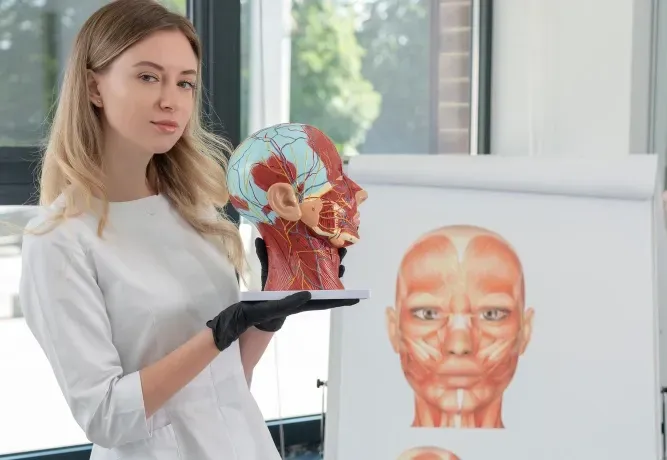
Focuses on facial skin, muscles, subcutaneous tissue, fat compartments, vascular supply, and nerves. Emphasises anatomical awareness for safe treatment planning and patient safety in aesthetic procedures.
Musculoskeletal and Structural Anatomy
Covers muscle tissue, contraction, and ageing changes, alongside skeletal structure and facial bone anatomy. Highlights the relationship between bone, soft tissue, and facial proportion in aesthetic outcomes.
Circulatory, Lymphatic and Respiratory Systems
Examines cardiovascular anatomy, blood circulation, and tissue perfusion. Explores lymphatic function in fluid balance and immunity, plus respiratory health and its relevance to patient assessment.
Major Body Systems and Their Relevance to Aesthetic Practice
Reviews digestive, endocrine, nervous, and reproductive systems, linking nutrition, hormones, and neurological factors to skin, hair, ageing, and patient suitability in aesthetic medicine.
Ageing, Fat Distribution and Body Contouring
Explores intrinsic and extrinsic ageing, cellular and structural changes, and fat distribution. Covers principles of body contouring, patient expectations, and anatomical variation in fat layers.
Patient Assessment, Safety and Pathology in Aesthetic Medicine
Provides frameworks for patient assessment, contraindications, and risk management. Introduces pathology at the aesthetic level, helping practitioners recognise abnormal presentations and when referral is necessary.
Key Information

Entry Requirements
1. Be aged 18 years or above.
2. Have a good standard of written and spoken English sufficient to engage with professional-level learning materials.
Our Teaching Approach
Learn at Your Own Pace
The course is offered online and is made for flexible self‑paced learning. It lets you study around your work and other commitments.
Learn Anatomy Through Aesthetic Relevance
The course links science with aesthetic medicine. It helps you see why skin, face parts, body systems and the aging process matter, in aesthetic medicine.
Build Before You Progress
We think advanced training must start with foundations. This course helps students build the confidence they need before moving into more specialised aesthetic training.
Progression Route
1. Progress into Certificate in Aesthetic Medicine
2. Progress into Foundation of Dermal Fillers
3. Progress into Foundation of Botulinum Toxin
4. Progress into Foundation of Botulinum Toxin & Dermal
Eligible Roles
Who We Train
Doctors
Physician Associates
Nurses
Dentists
Allied Health Professionals
Beauty Therapists
Aspiring Aesthetic Practitioners
Recognised Training & Qualifications
Accreditation & Validation

book your coursE
Upcoming Training Dates
Reserve your place today and take the first step towards advancing your knowledge and practice. Places are limited and fill quickly, so early enrolment is strongly encouraged to avoid disappointment. Enrol now to gain immediate access to your online study materials and complete your practical training at a time that suits you.
CUSTOM SCHEDULING OPTIONS
Can't Make These Dates?
Please share your preferred month and availability, and we will be in touch to confirm suitable training dates. Your response will help us shape our upcoming course schedule around the needs of our learners.
Tell us your preferred date
If the current dates for this course do not work for you, tell us what would and our admissions team will follow up.

Real Results | Real Delegates
What Our Delegates Say?
WE'RE HERE TO HELP
Not Sure Where to Start?
Taking the first step towards a new career can feel overwhelming and that is completely normal. Our academic team is here to make that decision easier for you.
Book your free consultation today and get personalised guidance on course eligibility, professional pathways, tuition fee instalments, and available discounts.
Your future starts with one conversation.
Let's talk.
Download Course Brochure
Receive immediate access to our latest curriculum overview, entry requirements, fees, and flexible schedules.
We have sent a copy of the prospectus directly to your email address. You should receive it momentarily.
If it doesn't arrive within a couple of minutes, please check your spam or junk folder.
Frequently Asked Questions
Everything You Need to Know
The Certificate in Anatomy, Physiology and Pathology for Aesthetic Medicine is delivered through a blended academic and clinical model, combining structured theoretical learning with supervised applied practice. Assessment is evidence-based and mapped against nationally recognised qualification standards.
1. Is this course suitable for complete beginners?
Yes. The course is built as a foundation and prerequisite programme. The course is suitable for individuals who do not have a qualification in anatomy and physiology.
The course is especially useful, for individuals who are preparing to start education in aesthetics. The course helps individuals build their knowledge before moving into training.
2. Why do I need anatomy and physiology for aesthetic medicine?
Aesthetic treatments work on the skin, the muscles, the blood vessels, the nerves, the tissues under the skin and other parts of the body. Knowing these parts helps professionals understand how each person is different what treatments are right, for each person the risks related to the body structure and why it's important to work safely and professionally.
3. Is this course a qualification to practise aesthetic treatments?
No. Completing an anatomy, physiology and pathology course does not by itself give someone the right to perform procedures. You can progress to further levels of study that may enable you to undertake and practise aesthetic treatments, subject to the relevant professional and regulatory requirements.
4. What is pathology, and why is it important in aesthetics?
Pathology is the study of disease and abnormal changes in the body. At a level, pathology knowledge helps aesthetic practitioners understand the difference, between normal and potentially abnormal presentations recognise potential contraindications or warning signs and understand when treatment should be postponed or when referral may be appropriate.
5. Can this course help me obtain professional indemnity insurance?
Anatomy and physiology training can become a part of a practitioner’s learning record and can help when you apply for treatment‑specific training and, for insurance. Still insurance rules vary with each provider.
6. Can I progress to other aesthetic courses after completing this programme?
Yes. This course can give a scientific base for moving into relevant aesthetic programmes. Each course can have its entry rules and learners must check that they satisfy the academic, professional and hands‑on needs, for each programme.
Courses You Might be Interested In
Explore Related Course

Hamilton House
4 Mabledon Place
Bloomsbury
London WC1H 9BB
United Kingdom





Copyright © 2026 Harley Institute of Aesthetics. All rights reserved.