Fellowship Programmes
Postgraduate Clinical Fellowship in Applied Hair Restoration and Surgical Practice
Move from studying hair restoration in theory to developing meaningful supervised exposure to its clinical and surgical application. Build advanced knowledge of hair and scalp science, patient assessment, surgical principles and professional practice while gaining experience across 10 supervised hair-transplant surgeries and clinical observations.
Tuition Fees
£6,000
Duration: 3 Months
Latest Skills
Expert-Led training
In-depth Theory
Deep Practical Insights
First Step to Practice
ABOUT THIS COURSE
Course Overview
Hair restoration has developed into a sophisticated clinical field, driven by increasing demand for evidence-informed approaches to hair loss and advances in surgical techniques. The global hair restoration market was estimated at approximately £7.7 billion in 2026 and is projected to reach £14.6 billion by 2030, representing a forecast compound annual growth rate of 16.6%; follicular unit extraction (FUE) accounted for more than 70% of the procedure segment in 2023.
This Postgraduate Fellowship is designed for professionals seeking advanced applied education in hair restoration, combining the scientific foundations of hair and scalp biology with trichological assessment, diagnosis, surgical procedures, clinical assessment and professional practice.
The programme places particular emphasis on translating academic knowledge into supervised clinical experience, culminating in 10 supervised surgeries and observations under a GMC-licensed specialist within an appropriate CQC-regulated clinical environment.
What You'll Learn?
Course Details
The Postgraduate Clinical Fellowship in Applied Hair Restoration and Surgical Practice provides an integrated academic and clinical pathway for professionals seeking structured development in contemporary hair restoration.
Learners study advanced anatomy, physiology and pathophysiology of the hair and scalp, develop systematic approaches to trichological assessment and diagnosis, and examine the principles underpinning surgical hair restoration and clinical assessment. Professional practice is embedded throughout the programme, including patient communication, clinical documentation, ethical responsibilities, multidisciplinary working, governance and professional boundaries.
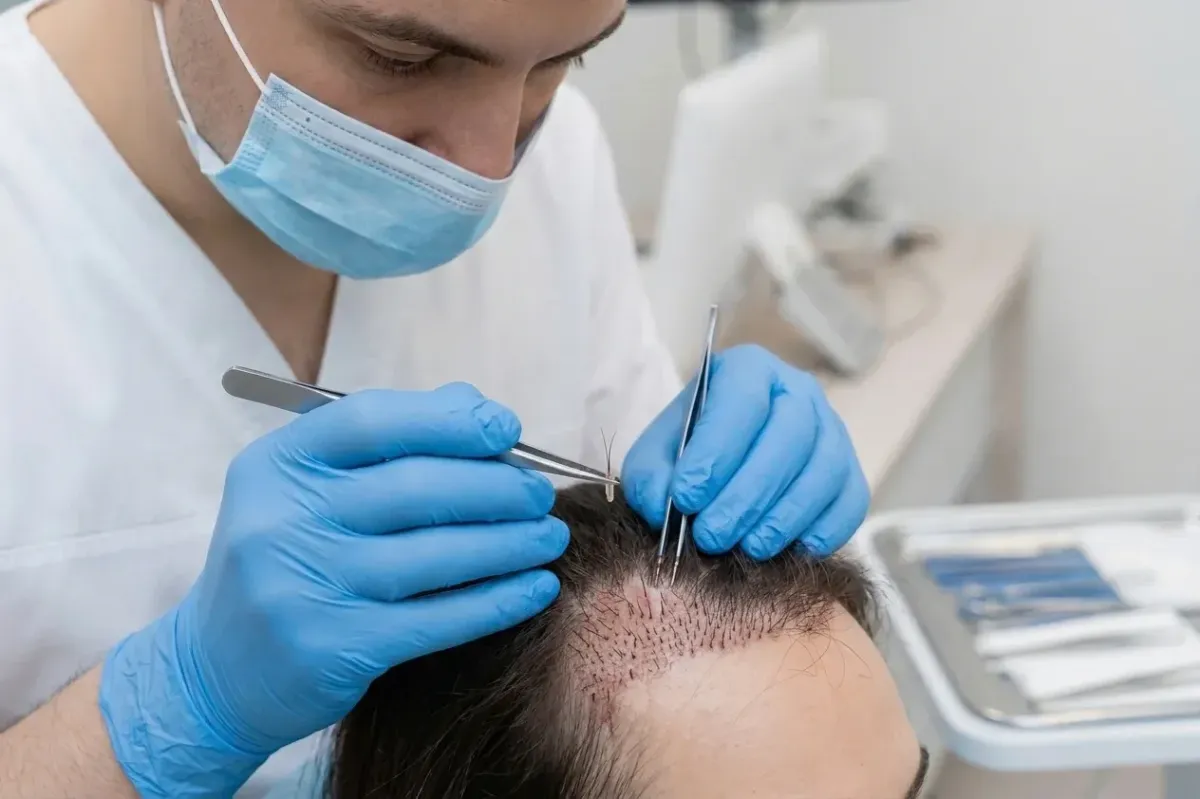
The mandatory clinical component provides exposure to real-world surgical workflows through 10 supervised surgeries and clinical observations, allowing learners to observe and develop practical understanding of patient preparation, operative workflow, graft handling, recipient-site planning, surgical assistance, post-operative care and clinical decision-making within an appropriately supervised setting.
The Certificate in Anatomy, Physiology and Pathology for Aesthetic Medicine is delivered through a blended academic and clinical model, combining structured theoretical learning with supervised applied practice. Assessment is evidence-based and mapped against nationally recognised qualification standards.
What You'll Study?
Module 1 — Advanced Anatomy, Physiology and Pathophysiology of Hair and Scalp
Develop an advanced understanding of the anatomy and biology of the hair follicle, scalp and associated structures, including the hair-growth cycle and factors influencing follicular function. Explore the pathological mechanisms underlying common and complex hair and scalp disorders relevant to hair restoration.
Module 2 — Trichological Assessment and Diagnosis
Develop a structured approach to patient history, scalp examination, donor assessment and the clinical evaluation of hair loss. Explore differential assessment and the recognition of conditions that may require investigation, medical management or specialist referral before surgical intervention.
Module 3 — Surgical Procedures and Clinical Assessment
Examine the principles and clinical workflow of contemporary hair-transplant surgery, including patient preparation, donor assessment, follicular-unit harvesting, graft handling, recipient-site design, implantation and post-operative care. Develop an understanding of how surgical planning should be informed by diagnosis, donor resources, hair characteristics, patient expectations and long-term restoration strategy.
Module 4 — Elements of Professional Practice
Explore the professional responsibilities involved in hair-restoration practice, including informed communication, consent, documentation, clinical governance, infection prevention, patient safety, multidisciplinary working and appropriate referral. Consider professional boundaries and the importance of practising within relevant qualifications, regulation and scope of practice.
Mandatory Clinical Practice
10 Supervised Hair-Transplant Surgeries and Clinical Observations
The fellowship includes a substantial supervised clinical component involving 10 hair-transplant surgeries and clinical observations under the supervision of a GMC-licensed specialist in an appropriate CQC-regulated clinical facility. Learners gain structured exposure to the complete clinical pathway, from patient preparation and surgical planning through operative workflow, graft handling and post-operative care, with participation determined by their existing qualifications, competence and permitted scope of practice.
Key Information

Entry Requirements
• Applicants should normally be 18 years of age or above.
• A relevant medical, healthcare, dental, aesthetic, trichology, hair-restoration or related professional qualification is recommended.
• Applicants should normally hold prior academic or professional learning in hair science, trichology, aesthetics, healthcare or a related discipline.
• Relevant professional experience may be considered through an appropriate recognition of prior learning process.
• Applicants must demonstrate sufficient English-language ability, professional conduct and a commitment to supervised clinical learning and safe practice.
Our Teaching Approach
• Advanced academic learning: Develop a strong scientific understanding of hair and scalp biology, pathology, assessment and the principles of hair restoration.
• Clinical and surgical application: Connect academic learning with patient assessment, surgical workflow, case-based discussion and supervised clinical observation.
• Supervised specialist experience: Observe and, where appropriate and permitted, participate in hair-transplant procedures under specialist supervision within an appropriate clinical environment.
Progression Route
• Advanced Hair Restoration Practice: Develop further professional competence through continued supervised experience and structured development in hair restoration.
• Specialist Trichology and Hair Science: Progress into advanced or postgraduate study focused on trichology, diagnosis, hair disorders and clinical hair science.
• Higher Postgraduate Study: Use the fellowship as part of a broader academic and professional pathway towards further postgraduate qualifications in trichology, hair restoration or related clinical disciplines, subject to the entry requirements of the receiving institution.
Eligible Roles
Who We Train
Doctors
Physician
Associates
Nurses
Dentists
Allied Health Professionals
Beauty Therapists
Aspiring Aesthetic Practitioners
Recognised Training & Qualifications
Accreditation & Validation

book your coursE
Upcoming Training Dates
Reserve your place today and take the first step towards advancing your knowledge and practice. Places are limited and fill quickly, so early enrolment is strongly encouraged to avoid disappointment. Enrol now to gain immediate access to your online study materials and complete your practical training at a time that suits you.
Making Your Training Accessible
We believe that financial considerations should never stand in the way of exceptional training. That is why we offer a range of flexible, accessible payment options designed to suit every circumstance.
To find out which payment option is right for you, we warmly invite you to contact our Admissions Team to arrange a free, no-obligation consultation.
Our advisers will take the time to understand your requirements and guide you towards the most suitable arrangement.
Debit or Credit Card
Pay securely in full at the time of enrolment using any major debit or credit card.
Pay By Klarna
Split your tuition into manageable instalments with Klarna's flexible buy-now, pay-later service, subject to eligibility.
Interest-Free Monthly Instalments
Spread the cost of your training across 12 equal monthly payments at 0% interest, making your training genuinely affordable without compromise. Terms and conditions apply.


CUSTOM SCHEDULING OPTIONS
Can't Make These Dates?
Please share your preferred month and availability, and we will be in touch to confirm suitable training dates. Your response will help us shape our upcoming course schedule around the needs of our learners.
Tell us your preferred date
If the current dates for this course do not work for you, tell us what would and our admissions team will follow up.

Frequently Asked Questions
Everything You Need to Know
The Certificate in Anatomy, Physiology and Pathology for Aesthetic Medicine is delivered through a blended academic and clinical model, combining structured theoretical learning with supervised applied practice. Assessment is evidence-based and mapped against nationally recognised qualification standards.
1. What is the Postgraduate Clinical Fellowship in Applied Hair Restoration and Surgical Practice?
It is an advanced academic and clinically focused fellowship combining hair and scalp science, trichological assessment, surgical hair-restoration principles and supervised clinical experience. The programme is designed for professionals who want to develop their understanding beyond theoretical study.
2. How much clinical experience is included?
The fellowship includes 10 supervised hair-transplant surgeries and clinical observations. These are undertaken under specialist supervision within an appropriate clinical environment, providing exposure to real-world hair-restoration workflows.
3. Who supervises the clinical practice?
The clinical component is conducted under the supervision of a GMC-licensed specialist within an appropriate CQC-regulated clinical facility. The exact activities a learner may perform depend on their existing professional qualification, competence, supervision arrangements and legal scope of practice.
4. What surgical techniques will I study?
The programme examines the principles and clinical workflow associated with contemporary hair-transplant surgery, including donor assessment, follicular-unit harvesting, graft handling, recipient-site planning, implantation and post-operative care. The clinical experience allows learners to observe these processes in practice.
5. Will I perform hair-transplant surgery independently after completing the fellowship?1
No qualification should be interpreted as automatically granting independent surgical authority. The fellowship provides education and supervised clinical experience; independent practice remains subject to the learner's existing professional registration, qualifications, competence, applicable legislation, clinical governance, employer requirements and professional indemnity arrangements.
6. Why is trichological assessment included in a surgical fellowship?
Successful hair restoration begins with appropriate patient and hair-loss assessment. Understanding the underlying condition helps practitioners distinguish potentially suitable surgical candidates from patients who may require medical investigation, treatment or specialist referral before considering transplantation.
7. Is the clinical placement conducted in a regulated environment?
The programme's clinical practice is designed to take place within an appropriate CQC-regulated clinical environment. In England, CQC registration applies to regulated activities, and providers must meet applicable legal and quality requirements for the activities they deliver.
8. What can I do after completing the fellowship?
The fellowship can support further professional development in hair restoration, trichology and related fields. Learners may also consider additional postgraduate education or specialist clinical training, depending on their existing professional background and the requirements of the next programme.
Courses You Might be Interested In
Explore Related Course
Hamilton House
4 Mabledon Place
Bloomsbury
London WC1H 9BB
United Kingdom





Copyright © 2026 Harley Institute of Aesthetics. All rights reserved.