degree programmes
MSc Trichology and Applied Hair Restoration
This specialised postgraduate qualification gives doctors a rare combination of
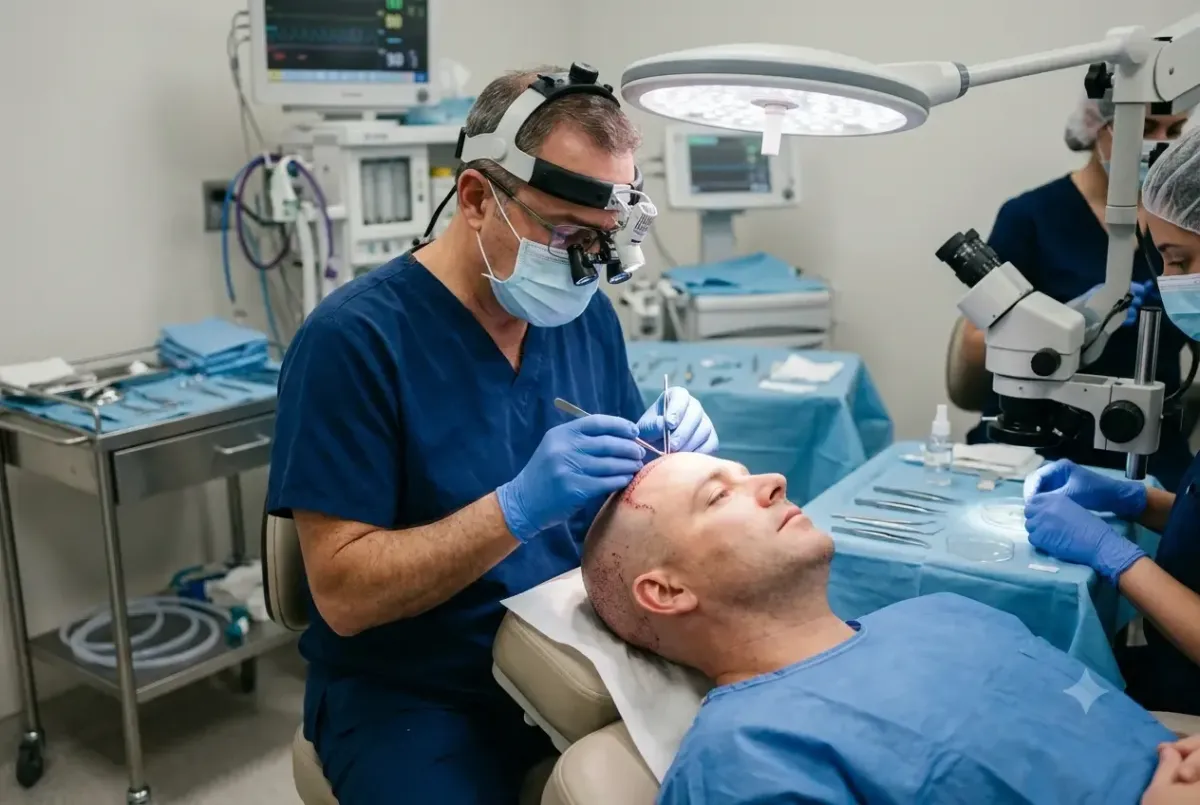
in-depth theoretical knowledge in Trichology and Hair Restoration surgery, combined with real clinical practice on actual patients, bridging the gap between academic mastery and hands-on surgical confidence.
Tuition Fees
£12,000
Duration: 12 - 24 Months
Degree Awarded by St. Martinus University
ISHRS Affiliated Faculty
ABHRS Diplomate-Led Training
Clinical Fellowship delivered by
GMC-registered doctors.
Supervised and Independent Surgical Practice Sessions
ABOUT THIS COURSE
Course Overview
The UK hair restoration market generated approximately £97 million in revenue in 2023 and is projected to reach roughly £316 million by 2030. This growth is being driven by rising patient demand, an ageing population, and growing awareness of both surgical and non-surgical treatment options. As the industry expands at this pace, it faces a parallel need for properly trained, qualified doctors who can meet rising demand with genuine clinical expertise and confidence.
The programme is built on the highest international standards, equipping future hair restoration doctors with the expertise and credibility to meet rising global demand in this exceptional and rewarding career.
What You'll Learn?
Course Details
The academic faculty at Harley Institute of Aesthetics identified a clear and pressing need for high-quality, specialist training in Trichology & Hair Restoration for doctors in the UK and internationally. In response, we developed this validated degree programme in partnership with St. Martinus University, a medical university chartered by the Government of the Netherlands Antilles, and in close collaboration with a former President of the American Board of Hair Restoration Surgery (ABHRS) and an Executive Committee member of the International Society of Hair Restoration Surgery (ISHRS). Together, this partnership has shaped a degree qualification that gives you the knowledge and practical skills grounded in the latest research and practice in trichology and hair restoration surgery.
The programme is structured across three progressive stages, Postgraduate Certificate, Postgraduate Diploma, and MSc, comprising six specialised modules, a Clinical Fellowship, and a final dissertation. This staged structure gives practitioners genuine flexibility, the ability to exit with a recognised qualification at each stage, or progress seamlessly through to the full MSc, without repeating previously completed learning.
The Certificate in Anatomy, Physiology and Pathology for Aesthetic Medicine is delivered through a blended academic and clinical model, combining structured theoretical learning with supervised applied practice. Assessment is evidence-based and mapped against nationally recognised qualification standards.
Postgraduate Certificate - Duration: Months - Tuition Fees: £5,000
Module 1 - Advanced Anatomy, Physiology and Pathophysiology of Hair and Scalp
This module builds an in-depth understanding of scalp and hair follicle anatomy, the biology of hair growth, and the pathophysiology of common hair and scalp disorders. Learners explore vascular, nerve, and lymphatic anatomy relevant to surgical planning, the hair growth cycle and follicular biology, and the mechanisms behind conditions such as androgenetic alopecia, alopecia areata, and scarring alopecia. The module also covers scalp disorders with surgical implications and the core scientific principles underpinning modern hair restoration, including donor dominance, graft survival, and transplantation outcomes.
Module 2 - Trichological Assessment and Diagnosis
This module covers the patient evaluation, diagnosis, and treatment-planning stages of the programme. Learners develop skills in comprehensive patient history-taking, scalp examination, and trichoscopy; classification of hair loss using recognised systems (Norwood-Hamilton, Ludwig, Sinclair); donor and recipient area assessment; and evidence-based procedure planning, including candidacy selection, graft estimation, and FUE/FUT/BHT decision-making. The module culminates in patient-specific surgical design, integrating hairline, density, and long-term aesthetic considerations into a cohesive treatment plan.
Module 3 - Surgical Procedures and Clinical Assessment
The principal applied surgical module, covering the full surgical pathway from patient preparation to advanced graft placement.
Unit 1: Pre- and Post-Operative Management — Patient assessment, consent, local anaesthesia, and post-operative care through to long-term follow-up.
Unit 2: Tools, Equipment & Technological Innovation — FUE and FUT instrumentation, digital and robotic hair restoration technology, and safe equipment use.
Unit 3: FUE and FUT Techniques — Advanced surgical procedures including FUT, FUE, manual and motorised extraction, body hair transplantation (BHT), and hybrid FUE-FUT approaches.
Unit 4: Advanced Graft Implantation & Artistic Design — Graft preparation, recipient-site creation, natural hairline design, graft placement, and DHI (direct hair implantation) techniques.
Postgraduate Certificate Level - Clinical Fellowship Programme
As part of the MSc in Trichology and Applied Hair Restoration, students at the Postgraduate Certificate stage gain supervised clinical exposure across 10 hair transplant surgical procedures, covering patient consultation and assessment, donor and recipient-area evaluation, surgical planning, graft handling and implantation, and post-operative care. All clinical participation is delivered under appropriate supervision, in line with each student's professional scope and clinical competence.
Postgraduate Diploma - Duration: Months - Tuition Fees: £5,000
Module 4 - Regenerative & Emerging Hair Restoration Therapies
This module explores the rapidly evolving field of regenerative medicine and emerging technologies in hair restoration, from PRP and stem-cell science to exosomes, tissue engineering, and AI-driven diagnostics. Students critically evaluate the scientific rationale, clinical evidence, and safety of both established and experimental therapies, developing the skills to distinguish proven practice from unproven innovation and to apply evidence-based judgement to future advances in the field.
Module 5 - Professional Practice in Trichology and Hair Restoration
This module develops the professional, ethical, and clinical judgement skills essential to safe, patient-centred hair restoration practice. It covers:
Patient Psychology & Consultation Skills — understanding the psychological impact of hair loss, managing patient expectations, and delivering effective, empathetic consultations with informed consent.
Complications, Risk Management & Corrective Surgery — recognising and managing surgical complications, emergency response, and approaches to corrective and revision procedures.
Legal, Ethical & Regulatory Frameworks — professional responsibilities, consent, confidentiality, clinical governance, and international regulatory considerations in hair transplantation.
Clinical Competencies & Ethical Marketing — core surgical techniques (FUE, FUT, BHT, DHI), patient assessment, and building an ethical, evidence-based hair restoration practice.
Module 6 - Clinical Research Methods
This module develops the advanced research skills needed to critically evaluate evidence, design clinically relevant studies, and contribute meaningfully to the evolving science of trichology and hair restoration. Students explore research design, statistical principles, outcome measurement, and research ethics, alongside academic writing and proposal development, building the foundation needed to translate rigorous research into confident clinical practice.
Postgraduate Diploma Level - Clinical Fellowship Programme
As part of the Postgraduate Diploma stage, students undertake supervised clinical training with exposure to 10 additional hair transplant procedures, developing advanced skills in patient assessment, treatment planning, donor and graft management, implantation techniques, complication awareness and clinical decision-making. Combined with the Postgraduate Certificate stage, this provides exposure to 20 supervised hair transplant procedures throughout the MSc in Trichology and Applied Hair Restoration, supporting progressive clinical development and practical competence.
MSc - Duration: Months - Tuition Fees: £2,000
Research Dissertation Report - Trichology & Hair Restoration
The programme culminates in an independent Master's-level research project addressing a clinically relevant question in trichology, hair science, or applied hair restoration. Students develop a focused research question, apply an appropriate methodology, and critically analyse their findings against existing evidence, producing an original piece of academic work that translates meaningfully into clinical practice.
Key Information

About St. Martinus University
This degree is validated and awarded by St. Martinus University, based in Curaçao, an autonomous constituent country within the Kingdom of the Netherlands. Established in 2000 and operating under a formal charter, the University is recognised by the Ministry of Health of Curaçao and listed in the World Directory of Medical Schools. This recognition means graduates of St. Martinus University's Doctor of Medicine degree are eligible to apply for GMC registration in the UK via the UKMLA pathway, subject to individual verification by ECFMG and the GMC.
Who It's For
1. GMC-registered doctors (or equivalent international medical registration) seeking to specialise in trichology and hair restoration surgery
2. Doctors who have completed the Postgraduate Certificate in Applied Hair Restoration & Surgical Practice (or the standalone Clinical Fellowship module), and wish to progress to full MSc level
3. Direct entry — Holders of a primary medical qualification (MBBS/MD or equivalent) from a recognised institution, with current medical registration
Our Teaching Approach
Online Self-Paced Theory: Core academic modules (anatomy, pathophysiology, assessment, research methods) delivered through structured online learning, allowing working doctors to study flexibly around clinical commitments.
1. Recorded lectures and reading materials hosted on the learning portal
2. Self-assessment quizzes and case-based learning exercises
3. Flexible pacing within set module deadlines
Live Virtual Seminars & Tutorials: Scheduled live sessions with faculty to reinforce theory, discuss complex cases, and provide direct access to expert input from ABHRS Diplomate and ISHRS-affiliated faculty.
1. Interactive Q&A and case discussion sessions
2. Guest lectures from ABHRS/ISHRS-affiliated experts
3. Small-group tutorials for personalised academic support
Supervised Clinical Fellowship: Hands-on surgical training delivered in person at approved clinical training sites, progressing from direct to independent supervision as competence is demonstrated.
1. Structured surgical case exposure (supervised and independent)
2. One-to-one mentorship from GMC-registered, ABHRS Diplomate surgeons
3. Logbook-based competency tracking and sign-off
Entry Requirements
1. A recognised primary medical qualification (MBBS, MD, or equivalent), from an institution listed in the World Directory of Medical Schools
2. Current medical registration and a valid licence to practise (GMC registration, or equivalent registration with an internationally recognised medical regulatory body)
3. Successful completion of the Postgraduate Certificate in Applied Hair Restoration & Surgical Practice (or our standalone Clinical Fellowship module), or equivalent prior learning, for candidates seeking advanced entry with credit exemption
4. Evidence of English language proficiency with (e.g., IELTS/OET), for candidates whose primary medical qualification was not delivered in English
5. A satisfactory personal statement and/or interview, demonstrating commitment to the specialty and suitability for hands-on surgical training
Eligible Roles
Career Pathways After Completion
Hair Transplant Surgeon
Consultant Trichologist
Clinical Director
Medical Lead
Clinical Researcher
Private Practice Owner
Recognised Training & Qualifications
Accreditation & Validation



book your coursE
Upcoming Training Dates
Reserve your place today and take the first step towards advancing your knowledge and practice. Places are limited and fill quickly, so early enrolment is strongly encouraged to avoid disappointment. Enrol now to gain immediate access to your online study materials and complete your practical training at a time that suits you.
CUSTOM SCHEDULING OPTIONS
Can't Make These Dates?
Please share your preferred month and availability, and we will be in touch to confirm suitable training dates. Your response will help us shape our upcoming course schedule around the needs of our learners.
Tell us your preferred date
If the current dates for this course do not work for you, tell us what would and our admissions team will follow up.

Real Results | Real Delegates
What Our Delegates Say?
WE'RE HERE TO HELP
Not Sure Where to Start?
Taking the first step towards a new career can feel overwhelming and that is completely normal. Our academic team is here to make that decision easier for you.
Book your free consultation today and get personalised guidance on course eligibility, professional pathways, tuition fee instalments, and available discounts.
Your future starts with one conversation.
Let's talk.
Download Course Brochure
Receive immediate access to our latest curriculum overview, entry requirements, fees, and flexible schedules.
We have sent a copy of the prospectus directly to your email address. You should receive it momentarily.
If it doesn't arrive within a couple of minutes, please check your spam or junk folder.
Frequently Asked Questions
Everything You Need to Know
1. Why choose Harley Institute of Aesthetics?
The programme combines university level postgraduate education, specialist hair restoration training and clinical fellowship experience, supported by experienced faculty and an internationally focused curriculum.
2. Who is this MSc designed for?
The MSc is primarily designed for qualified doctors holding medical registration in the UK, such as GMC registration, or registration with the relevant medical council in their home country. Non-doctors may be considered for the Clinical Technician pathway, subject to their qualifications, professional experience and the programme’s entry requirements.
3. What does the programme cover?
The MSc covers trichology, hair and scalp science, diagnosis, hair-loss management, FUE and FUT surgery, graft implantation, regenerative therapies, clinical practice, research and professional practice.
4. Is there practical surgical training?
Yes. The programme includes a Clinical Fellowship with supervised exposure to hair transplant procedures, allowing progressive development of practical clinical skills.
5. How many procedures will I be exposed to?
Across the Postgraduate Certificate and Diploma stages, students receive exposure to up to 20 supervised hair transplant procedures, subject to clinical availability, competence and professional scope.
6. Can I study while working?
Yes. The academic component combines flexible online self-paced learning with live virtual teaching, allowing doctors to study alongside their clinical commitments.
7. Is there live teaching?
Yes. Students can participate in live seminars, tutorials and case discussions with experienced faculty, including ABHRS Diplomate and ISHRS affiliated trainers.
8. Does the MSc prepare me for the ABHRS examination?
The programme is designed to provide relevant academic and clinical preparation to support candidates preparing for the ABHRS examinations. Completion of the MSc does not itself confer ABHRS Diplomate status.
9. Where is the Clinical Fellowship delivered?
Clinical training is delivered at approved CQC registered clinics, under the supervision of GMC registered and experienced hair transplant surgeons. Practical training and supervised clinical exposure are arranged as an integral part of the programme.
10. What are the career opportunities after graduation?
Graduates may progress towards roles such as Hair Transplant Surgeon, Consultant Trichologist, Clinical Director, Medical Lead, Clinical Researcher or Private Practice Owner, subject to applicable professional and regulatory requirements.
The Certificate in Anatomy, Physiology and Pathology for Aesthetic Medicine is delivered through a blended academic and clinical model, combining structured theoretical learning with supervised applied practice. Assessment is evidence-based and mapped against nationally recognised qualification standards.
Courses You Might be Interested In
Explore Related Course

Hamilton House
4 Mabledon Place
Bloomsbury
London WC1H 9BB
United Kingdom





Copyright © 2026 Harley Institute of Aesthetics. All rights reserved.