Qualifications Pathways
Professional Certificate in Trichology and Hair Science
The Professional Certificate in Trichology and Hair Science gives you a structured foundation in hair biology, scalp disorders, clinical assessment and trichological practice, helping you build the knowledge to assess hair and scalp concerns more systematically and progress towards advanced professional study.
Tuition Fees
£2,500
Duration: 5 Days
latest Skills
Expert-Led training
In-depth Theory
Deep Practical Insights
First Step to Practice
ABOUT THIS COURSE
Course Overview
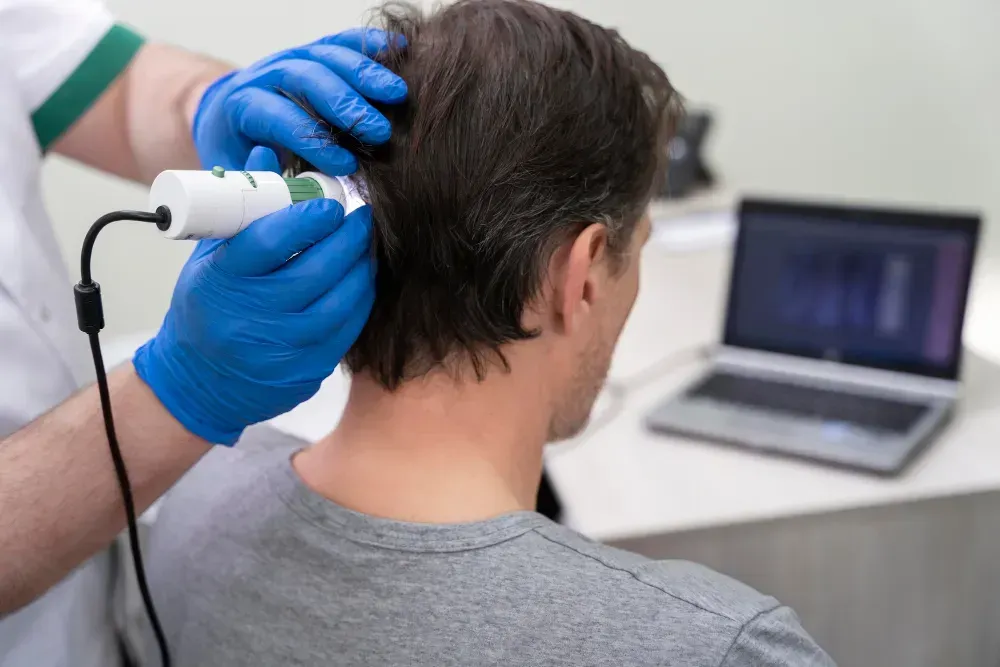
Hair and scalp disorders affect a substantial proportion of the population, while androgenetic alopecia alone has been reported to affect up to 80% of men and around 40–50% of women by later life, depending on population and study methodology. The wider hair restoration sector is also expanding, with one 2026 market analysis estimating the global hair restoration market at US$7.37 billion in 2025, with continued growth projected through 2030. This creates growing demand for professionals who can move beyond generic hair-loss advice and understand the science behind different presentations. This programme introduces the foundations of trichology, hair and scalp anatomy, physiology and pathophysiology, structured consultation, clinical assessment, trichoscopy, alopecia and hair-shedding disorders, inflammatory and infectious scalp conditions, hair-shaft abnormalities, nutrition and systemic influences, and professional management and referral. Trichoscopy is particularly valuable because it provides a non-invasive method of examining hair and scalp features and can support differential diagnosis across a range of hair disorders.
What You'll Learn?
Course Details
The Professional Certificate in Trichology and Hair Science is designed as a structured professional foundation for learners seeking a deeper understanding of hair and scalp health. The programme combines scientific learning with clinically oriented assessment principles, enabling learners to understand how different forms of alopecia, shedding, scalp disease and hair-shaft abnormality present, how nutritional, hormonal and systemic factors may influence hair, and when a presentation requires further investigation or referral. The programme also includes a 3-Day Supervised Clinical Trichology Placement, providing an opportunity to observe and develop practical understanding within a supervised clinical environment. The course is intended to establish a strong foundation for continued professional development and progression into more advanced trichology, hair restoration or related clinical education.
The Certificate in Anatomy, Physiology and Pathology for Aesthetic Medicine is delivered through a blended academic and clinical model, combining structured theoretical learning with supervised applied practice. Assessment is evidence-based and mapped against nationally recognised qualification standards.
What You'll Study?
Foundations of Trichology, Hair Science and Professional Practice
Build a strong foundation in trichology, the scientific study of hair and scalp disorders, and the professional principles that underpin responsible practice. Explore the scope of trichological practice, professional conduct, evidence-informed practice and the role of the practitioner within a wider healthcare environment.
Anatomy, Physiology and Pathophysiology of the Hair and Scalp
Study the structure and function of the hair follicle, scalp and associated tissues, together with the hair-growth cycle and biological processes that influence hair health. Develop an understanding of how physiological and pathological changes can contribute to hair loss and scalp disorders.
Trichological Consultation and Clinical Assessment
Learn how to approach a structured trichological consultation, including patient history, presenting concerns, examination and relevant clinical information. Develop a systematic approach to assessing hair and scalp complaints while recognising findings that may require investigation or referral.
Trichoscopy, Hair Analysis and Diagnostic Assessment
Explore trichoscopy and other methods used to examine hair and scalp characteristics in greater detail. Learn how clinical findings and hair-analysis observations can contribute to differential assessment and the recognition of different hair and scalp disorders. Trichoscopy is recognised as a useful non-invasive diagnostic aid across multiple forms of alopecia and scalp disease.
Non-Scarring Alopecias and Hair Shedding Disorders
Examine common non-scarring forms of hair loss and excessive shedding, including pattern hair loss and other clinically important presentations. Develop an understanding of their characteristic features, possible contributing factors and the importance of appropriate assessment.
Scarring Alopecias and Inflammatory Scalp Disorders
Study scarring alopecias and inflammatory disorders that can affect the scalp and potentially result in permanent follicular damage. Learn to recognise important clinical and trichoscopic features and understand when specialist investigation or referral is required.
Infectious, Parasitic and Other Scalp Disorders
Explore infectious, parasitic and other conditions affecting the scalp and hair. Develop knowledge of characteristic presentations, potential transmission or contributing factors, assessment considerations and appropriate referral pathways.
Hair-Shaft Disorders and Genetic Hair Abnormalities
Examine disorders affecting the structure, strength and appearance of the hair shaft, alongside selected inherited hair abnormalities. Learn how clinical and trichoscopic features can support recognition and differentiation of these conditions.
Nutrition, Hormones, Systemic Health and Hair
Explore the relationship between hair health and nutrition, endocrine function, hormonal changes and wider systemic health. Develop an understanding of how underlying health factors may contribute to hair shedding, thinning or changes in hair quality and why appropriate medical investigation may be necessary.
Trichological Management, Referral and Professional Practice
Bring together the knowledge developed throughout the programme to consider structured trichological management and professional practice. Explore appropriate referral, patient communication, documentation, professional boundaries and the importance of working within scope of practice.
3-Day Supervised Clinical Trichology Placement
The programme includes a 3-Day Supervised Clinical Trichology Placement, providing learners with exposure to the practical application of trichological knowledge within a supervised setting. The placement supports the transition from theoretical study to clinical observation and professional application, with emphasis on consultation, examination, hair and scalp assessment, trichoscopy, clinical reasoning, documentation and appropriate referral.
Key Information

Entry Requirements
• Applicants should normally be 18 years of age or over.
• A Level 3 qualification or equivalent prior education is recommended.
• Applicants with relevant professional experience in healthcare, beauty, aesthetics, hair, wellness or related fields may also be considered.
• Learners should have sufficient English-language ability to understand academic and professional course materials.
• Applicants should demonstrate an appropriate level of commitment to professional learning, clinical professionalism and safe practice.
Our Teaching Approach
• Science-led learning: Hair and scalp conditions are studied through anatomy, physiology, pathophysiology and evidence-informed clinical principles rather than generic hair-care advice.
• Clinical application: Case-based learning, assessment frameworks and trichoscopy principles help learners connect scientific knowledge with realistic hair and scalp presentations.
• Supervised practical exposure: The 3-day clinical placement provides an opportunity to observe professional trichological practice and consolidate learning within a supervised environment.
Progression Route
• Advanced Trichology Study: Progress to more advanced professional education in trichology, hair and scalp disorders and clinical assessment.
• Applied Hair Restoration: Build a foundation for further study in applied hair restoration, hair transplantation and related regenerative or non-surgical approaches, subject to entry requirements.
• Professional Development: Use the qualification as part of a broader professional-development pathway alongside relevant clinical, aesthetic, dermatological or hair-restoration education.
Eligible Roles
Who We Train
Doctors
Physician
Associates
Nurses
Dentists
Allied Health Professionals
Beauty Therapists
Aspiring Aesthetic Practitioners
Recognised Training & Qualifications
Accreditation & Validation

book your coursE
Upcoming Training Dates
Reserve your place today and take the first step towards advancing your knowledge and practice. Places are limited and fill quickly, so early enrolment is strongly encouraged to avoid disappointment. Enrol now to gain immediate access to your online study materials and complete your practical training at a time that suits you.
Making Your Training Accessible
We believe that financial considerations should never stand in the way of exceptional training. That is why we offer a range of flexible, accessible payment options designed to suit every circumstance.
To find out which payment option is right for you, we warmly invite you to contact our Admissions Team to arrange a free, no-obligation consultation.
Our advisers will take the time to understand your requirements and guide you towards the most suitable arrangement.
Debit or Credit Card
Pay securely in full at the time of enrolment using any major debit or credit card.
Pay By Klarna
Split your tuition into manageable instalments with Klarna's flexible buy-now, pay-later service, subject to eligibility.
Interest-Free Monthly Instalments
Spread the cost of your training across 12 equal monthly payments at 0% interest, making your training genuinely affordable without compromise. Terms and conditions apply.

CUSTOM SCHEDULING OPTIONS
Can't Make These Dates?
Please share your preferred month and availability, and we will be in touch to confirm suitable training dates. Your response will help us shape our upcoming course schedule around the needs of our learners.
Tell us your preferred date
If the current dates for this course do not work for you, tell us what would and our admissions team will follow up.

Frequently Asked Questions
Everything You Need to Know
The Certificate in Anatomy, Physiology and Pathology for Aesthetic Medicine is delivered through a blended academic and clinical model, combining structured theoretical learning with supervised applied practice. Assessment is evidence-based and mapped against nationally recognised qualification standards.
1. What is the Professional Certificate in Trichology and Hair Science?
It is a professional programme providing structured knowledge of hair science, scalp health, hair-loss disorders, clinical assessment and trichological practice. It is designed to establish a foundation for further professional and academic development in the field.
2. Who is this course designed for?
The course may suit professionals and learners interested in hair and scalp health, including those from healthcare, aesthetics, beauty, hair and related professional backgrounds. Applicants should meet the stated entry requirements.
3. Will I learn how to assess hair loss?
Yes. The programme covers structured trichological consultation, clinical assessment, hair analysis and trichoscopy, together with the recognition of different forms of alopecia, shedding disorders and scalp conditions. Trichoscopy can provide useful non-invasive information when differentiating between several hair-loss disorders.
4. Does the course cover different types of alopecia?
Yes. The programme covers both non-scarring and scarring alopecias, as well as hair-shedding disorders. It also examines inflammatory, infectious and other scalp disorders that may present alongside or resemble hair-loss conditions.
5. Is trichoscopy included?
Yes. Trichoscopy, hair analysis and diagnostic assessment form a dedicated module. Learners study how trichoscopic findings can support the assessment and differentiation of hair and scalp disorders.
6. Does the programme include practical clinical experience?
Yes. The course includes a 3-Day Supervised Clinical Trichology Placement, designed to provide supervised exposure to professional trichological assessment and clinical practice.
7. Will completing the course allow me to diagnose or treat medical conditions independently?
The qualification provides education and professional development; it does not automatically confer a medical licence, specialist registration or authority to practise beyond your existing professional scope. Any clinical activity must remain within your professional qualifications, legal scope of practice, local regulations, employer requirements, insurance conditions and appropriate clinical governance.
8. What can I study after completing this certificate?
The certificate can provide a foundation for progression into more advanced trichology and hair-restoration education. Depending on your existing qualifications and professional background, progression may include advanced trichology, applied hair restoration, hair transplantation or related postgraduate study.
Courses You Might be Interested In
Explore Related Course
Hamilton House
4 Mabledon Place
Bloomsbury
London WC1H 9BB
United Kingdom





Copyright © 2026 Harley Institute of Aesthetics. All rights reserved.